The Voss Fellowship Program is the premier training and funding opportunity for undergraduates interested in environmental research at Brown University.

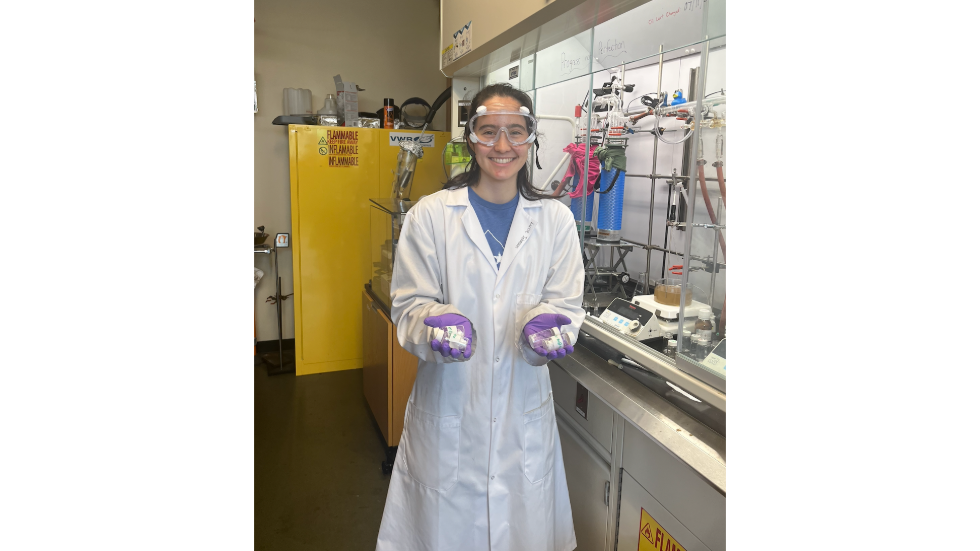
For Lucie Johnson ’27, climate solutions start at the molecular level. As a member of Associate Professor Jerome Robinson’s lab, she is exploring how chemistry can help address one of the world’s most persistent environmental challenges: plastic pollution.
How would you summarize your research?
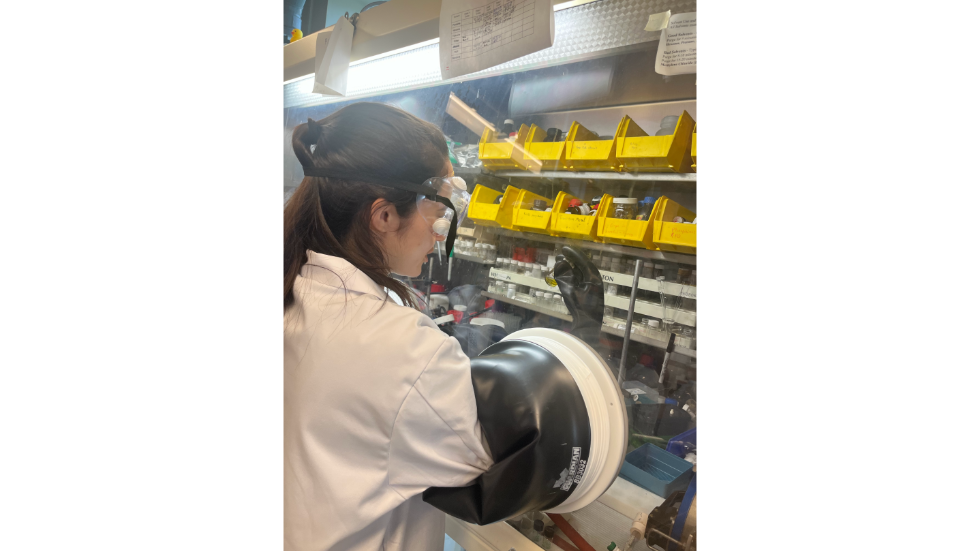
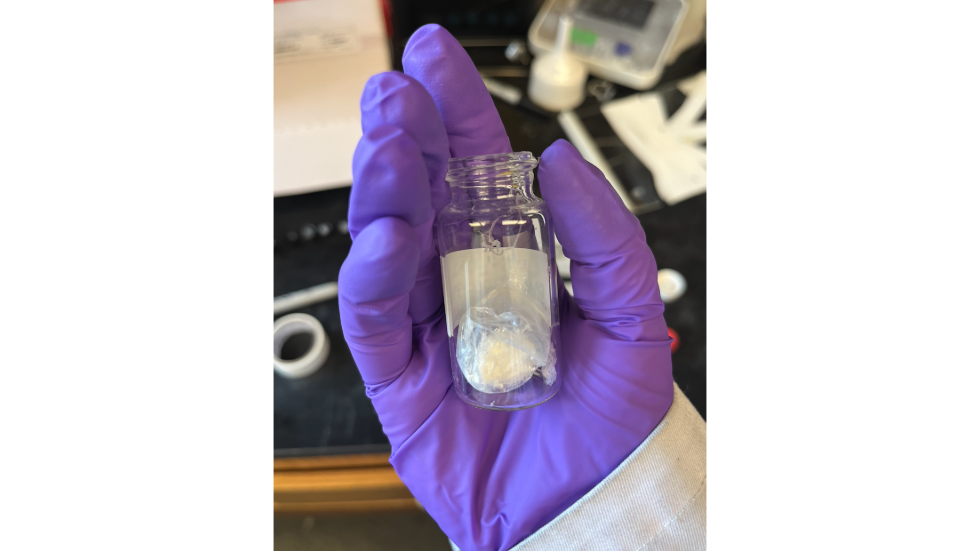
My work focuses on the development and characterization of a library of novel biodegradable polymers (plastics). More specifically, I study triblock copolymers composed of the three most common bioplastics. All three are biocompatible, degrade via industrial composting, and are sourced from abundant and inexpensive precursors, but they have limited properties in isolation. Copolymerization allows us to combine the properties of these bioplastics to achieve synergetic properties.
These findings will form the foundation of robust structure-function relationships that will guide the development of sustainable plastics, which can begin to replace difficult-to-degrade polyolefins in their wide range of applications.
Why were you drawn to this research?
I’ve always been interested in using chemistry for sustainable applications; chemistry has incredible potential to develop creative, global solutions to the many challenges we now face due to climate change. Polymers in particular are, to me, chemistry made tangible. We can take molecular building blocks and use fundamental chemistry concepts to actually build materials that we can hold, which is just incredible to me.
Why is this research important?
In the big picture, our goal is to develop materials that can contribute to a more sustainable, less-polluting plastic economy. Polyolefins, which make up the majority of plastics produced worldwide, are incredibly difficult to degrade and result in huge amounts of plastic pollutants ending up in the environment every year. (Polyolefins are truly everywhere: cling film, plastic bags, plastic bottles, food and medical packaging, pipes, and much more.)
And while polyolefins are typically produced from fossil fuels, bioplastics come from renewable sources. If biodegradable plastics were able to replace polyolefins in their wide range of uses, we could remove a significant source of environmental pollution.
This work builds a very important foundation of knowledge that we will be able to use to develop more optimized systems that will hopefully one day play a role in a more sustainable plastics landscape.