Institute at Brown for Environment and Society

Meet Voss Fellow Jules Ho ’27: Tracking wild sloth microbiomes

A dual-degree student in Environmental Sciences and Studies and the Rhode Island School of Design’s Illustration Department, Jules Ho ’27 studies the gut microbiomes of wild sloths in Costa Rica to map normal variation and test how species, habitat, and rehabilitation status shape these microbial communities.

The Voss Fellowship Program is the premier training and funding opportunity for undergraduates interested in environmental research at Brown University.
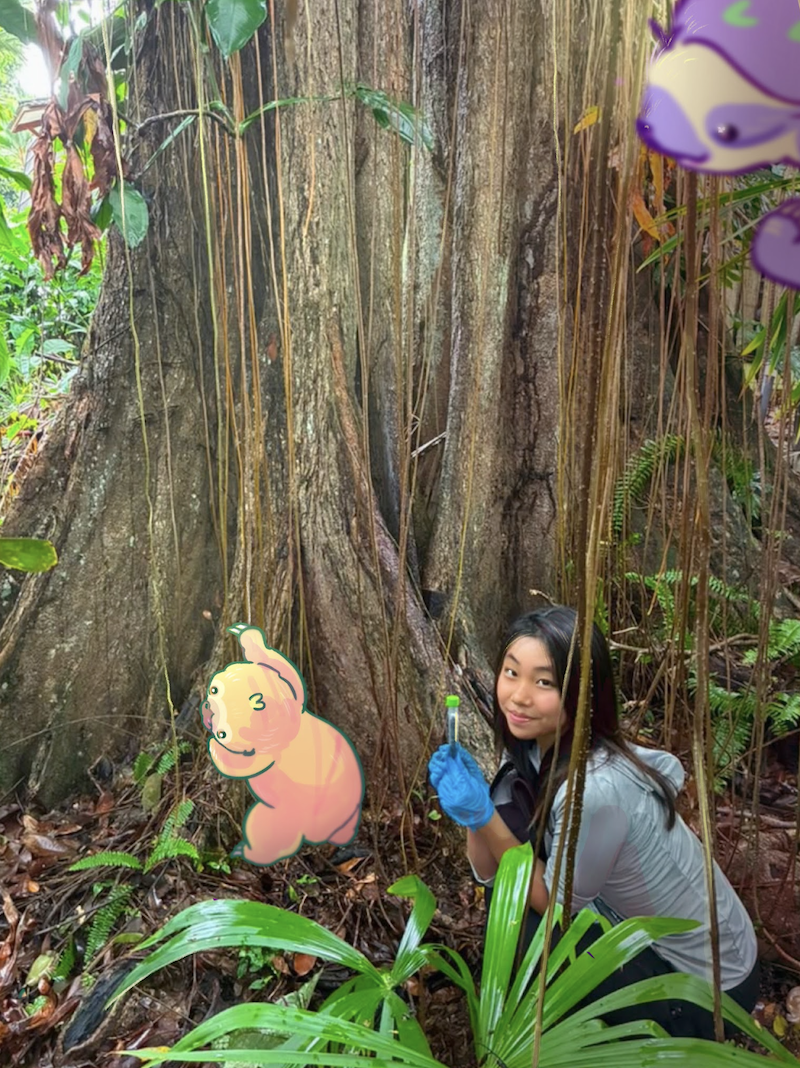
Jules Ho ’27 alongside her own illustrations

At first mention, animal excrement might not seem like the most alluring topic — but for researchers like Jules Ho, it can provide significant, far-reaching insights. As an IBES Voss Fellow and Royce Fellow in Associate Professor Tyler Kartzinel’s Genomic Opportunities Lab and a popular scientific storyteller on Instagram, Ho investigates the hidden microbial communities living inside sloths, shedding light on otherwise-invisible worlds through both data and illustration. 

How would you summarize your research? 

I study the gut microbiomes of wild sloths across Costa Rica. By combining DNA sequencing, bioinformatics, and field ecology, I’m asking whether these microbial communities are structured most strongly by host species, environmental conditions, or physiological conditions. 

One of my goals is to establish what normal microbiome variation looks like across individuals, species, and habitats. With that baseline, we can begin to distinguish ordinary variation from changes that may reflect stress, illness, or environmental disturbance.

Why were you drawn to this research?

I have always been fascinated by communities within animals, and how understanding them offers a lens for interpreting wildlife health. Sloths have the lowest metabolic rate among mammals and a notoriously leafy diet, making the gut microbiome a key player in digestion. 

The close coupling between the gut microbiome and sloth nutrition and energy makes them a rather fascinating biological system to explore my fascination with host-associated communities and their link to host health! 
What was your fieldwork like?

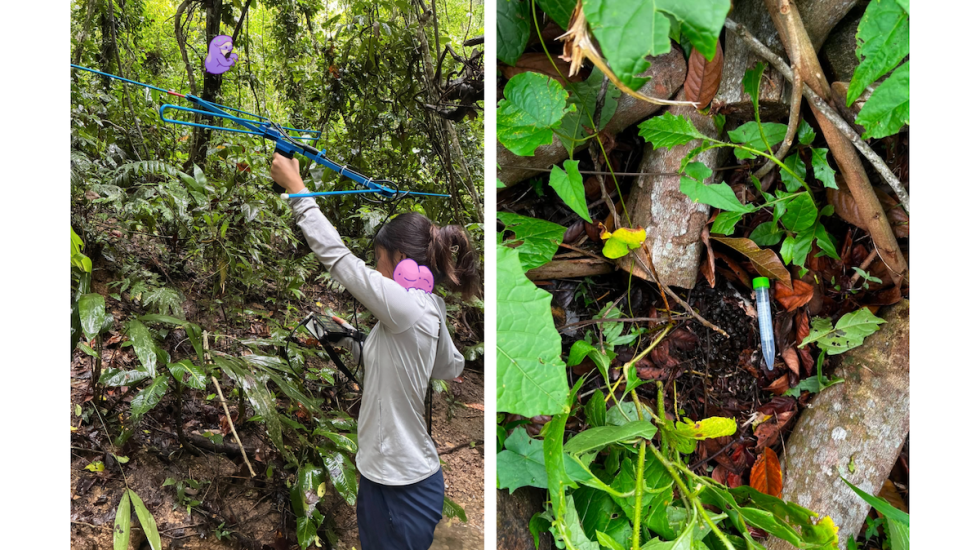
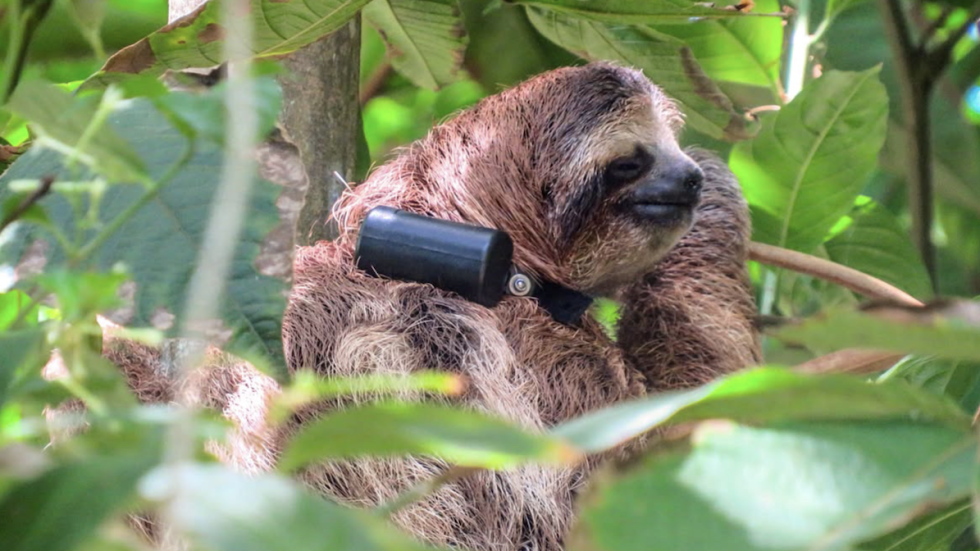
Most days began with early hikes, carrying a GPS, data recorder, and measuring tape to monitor radio-collared sloths across forest patches in Puerto Viejo with the Sloth Conservation Foundation team. But my “job” formally began after locating a sloth. I would search for fecal samples with a microbiome researcher’s best friend: a long branch to sweep foliage at tree bases in search of droppings. Sloths defecate only about once a week, and three-toed sloths often bury their feces, so finding fresh samples required equal parts luck and patience.

What have you discovered thus far? 

I have found that host species appear to structure gut microbiomes more strongly than habitat. Two- and three-toed sloths living in the same habitat can have more distinct microbiomes than members of the same species living in very different environments. This pattern is consistent with differences in their digestive physiology and could eventually inform translocation and rehabilitation decisions.

Why is your work important in a broader context?

We often think about environmental change in terms of habitats and the animals we can see. But every animal also depends on an invisible community of microbes involved in digestion, nutrition, immunity, and other physiological processes.

The challenge is that microbiomes naturally vary between individuals and over time. Essentially, not all variation is biologically meaningful. Before we can identify changes associated with stress or declining health, we need to understand the ecological processes that normally structure these communities, such as environment and species identity, and the range of variation healthy animals can contain.

My research helps establish that baseline in sloths, so that future studies can more carefully distinguish normal microbial reorganization from possible physiological disruption.

Tag along

Join Ho as she conducts research in Costa Rica and on Brown’s campus.

@brown_ibes

How has the Voss Fellowship furthered your research?

Before Voss, many of our lab’s samples were essentially rows in a spreadsheet. I could identify patterns in the sequencing data, but I knew much less about the individual sloths, habitat characteristics, or the people who had collected and monitored them.

The Voss Fellowship allowed me to return to Costa Rica and work alongside the trackers, veterinarians, and researchers who knew those animals best. I saw the forest patches represented by the metadata, learned the histories of individual sloths, and better understood the ecological differences between sampling sites. The ecological context I gained in the field has inspired new questions and interpretations that will change how I run and understand my analyses. 

Where do you see this work taking you in the future? 

Sloths introduced me to an entire hidden world inside the gut. The more I study their microbiomes, the more interested I become in how animal hosts shape the communities they contain, and whether community dynamics can offer a perspective on animal health.

I hope to spend my career investigating these host-associated communities across wildlife systems and sharing my research through illustration and character storytelling. The ultimate dream is to contribute to conservation through both scientific discovery and inspiring curiosity and care for wildlife through the stories I share.