The polluted air above any city has a complicated chemical profile. Liza Marcus ’26 is learning how to read it.
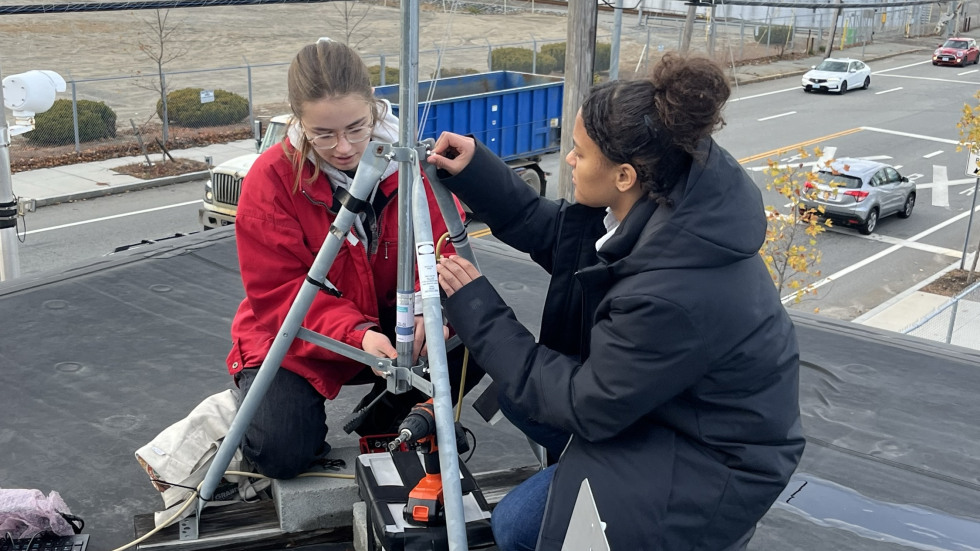
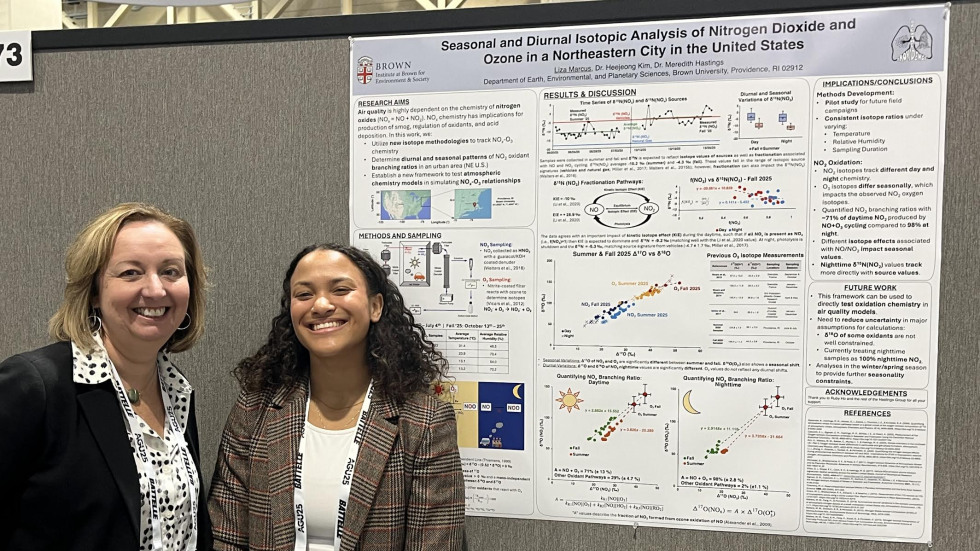
As an IBES Undergraduate Voss Fellow concentrating in chemistry and Africana studies and working on Professor Meredith Hastings’ Breathe Providence team, Marcus has spent the past year developing and deploying new environmental sampling methods to study the chemistry of two of the EPA’s most closely regulated atmospheric pollutants: nitrogen oxides (NOx) and ground-level ozone.
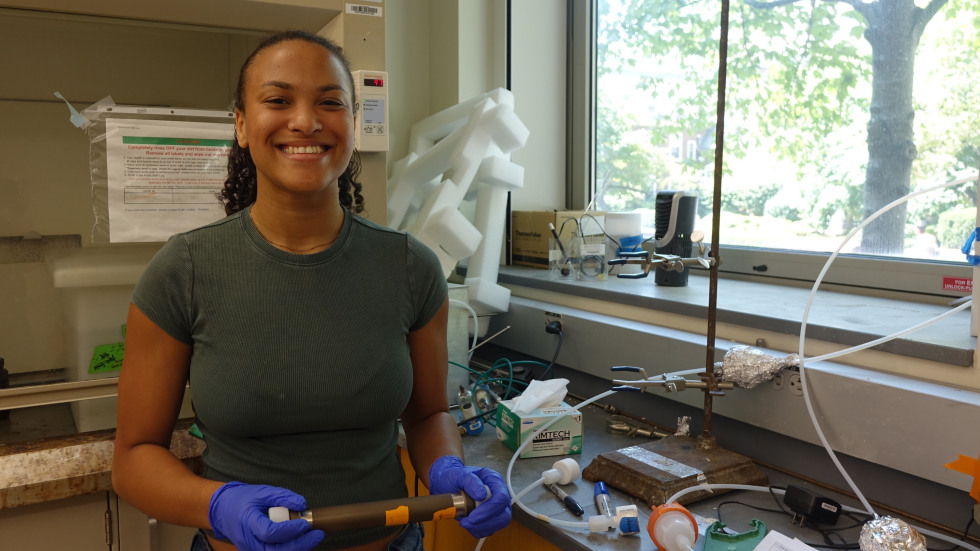
Her research — collecting air samples around the clock, processing them through mass spectrometry, and tracing the molecular signatures left behind by chemical reactions — is helping scientists better understand how harmful pollutants form, and what that means for the air we breathe.
How would you summarize your research?
“I research reactive nitrogen oxides (commonly referred to as NOx) and ozone chemistry in the atmosphere. NOx can be emitted from both natural sources, like soil, and human-related activities, like vehicles and combustion. NOx can produce ground-level ozone, a harmful pollutant with ecological and human health implications. Together, NOx and ozone can contribute to the formation of particulate matter, which can penetrate deep into the human respiratory tract and form photochemical smog, as well as particulate nitrate, which can cause algae blooms, forest degradation, and soil acidification.