ENVS student Shant Ispendjian ’28 builds a national platform for environmental advocacy
After witnessing pollution in Southern California’s coastal waters as a high school student, Ispendjian founded Saving the Sea. Today, the national nonprofit is helping students translate environmental research into policy and action.
Growing up in southern California, Shant Ispendjian spent countless hours rowing in the waters of Marina del Rey. But alongside his love for the ocean, he noticed something troubling: the pollution accumulating in the harbor he called home.
Rather than simply accepting the problem, Ispendjian set out to address it. While still in high school, the current ENVS concentrator founded Saving the Sea, an environmental nonprofit dedicated to turning research into action. What began as a local effort focused on beach cleanups and community engagement has since grown into a national organization that brings together student researchers from universities across the country to develop policy briefs, research reports and legislative proposals aimed at advancing environmental protection.
“ Our mission is to create meaningful and lasting environmental change through rigorous research and smart policy.
”
Shant Ispendjian ’28
ENVS concentrator and Saving the Sea founder
Saving the Sea started local and grew with IBES support
While Saving the Sea started out with beach cleanups and community engagement activities, mentors from IBES such as Director of Undergraduate Studies Mindi Schneider have helped Ispendjian expand the nonprofit to emphasize research and policy as its main strategies for making an impact.
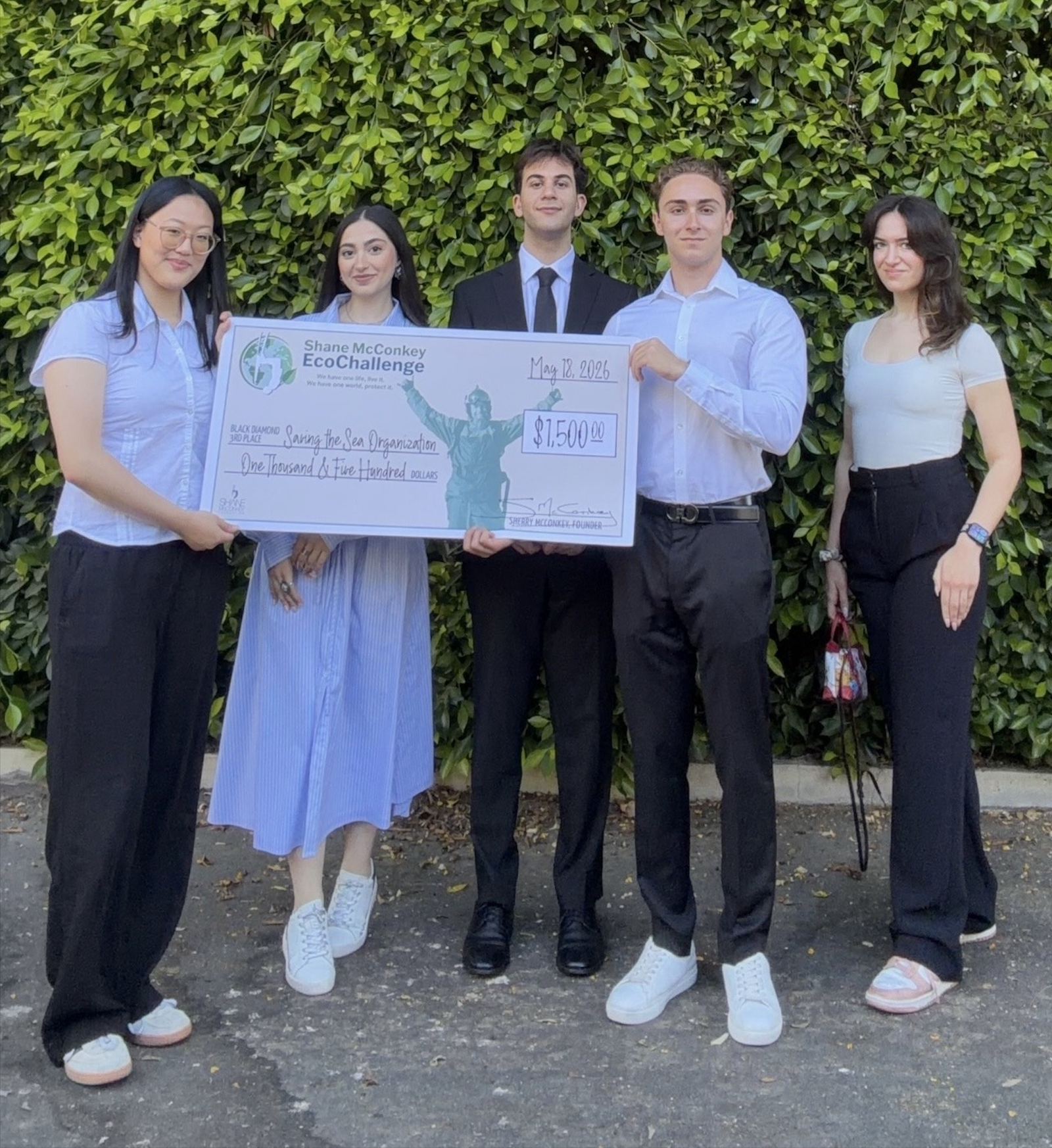
Saving the Sea team members, including Ispendjian (center), were awarded $1,500 from the Shane McConkey EcoChallenge.
“We believe this approach allows students to create broader and more lasting change. The organization has genuinely developed alongside us,” Ispendjian said. “This year, we completed three initiatives, generating over a dozen deliverables, including a life cycle analysis of single-use plastics; a policy brief on microplastics and public health; a report on sustainable alternatives to plastics; a policy brief on wildfire resilience and housing; and a report on water scarcity and risk.”
Inspiring future leaders
Recently, Saving the Sea earned a win in the Shane McConkey EcoChallenge, which encourages students globally to identify an environmental challenge in their community and come up with solutions.
Saving the Sea placed third in the Black Diamond category. In this category, high school and college-aged youth are asked to adopt action-oriented environmental solutions for real world issues. Ispendjian and his team focused on ocean conservation and marine ecosystem protection through awareness and educational campaigns.
“The EcoChallenge appealed to us because it aims to empower students to take concrete environmental action, which closely aligns with our mission,” Ispendjian said.
Ispendjian first learned of the challenge from Schneider, and winning third was “incredibly validating” for the Saving the Sea team. He explained, “the $1,500 prize arrived at the perfect moment—it allowed us to formally register as a nonprofit, marking a major milestone for us and opening many opportunities for the future.”
Saving the Sea recently launched its three-week Emergent Fellows Program for high school students.
The future of Saving the Sea involves students at every level. The organization recently launched its first annual Emergent Fellows Program, a fellowship for 25 high school students. “Over three weeks, they will work with us on environmental research, with each fellow publishing an original opinion piece on a chosen environmental topic,” Ispendjian said. “This is our way of investing in the next generation, as this organization invested in us.”
Looking ahead: expansion and education
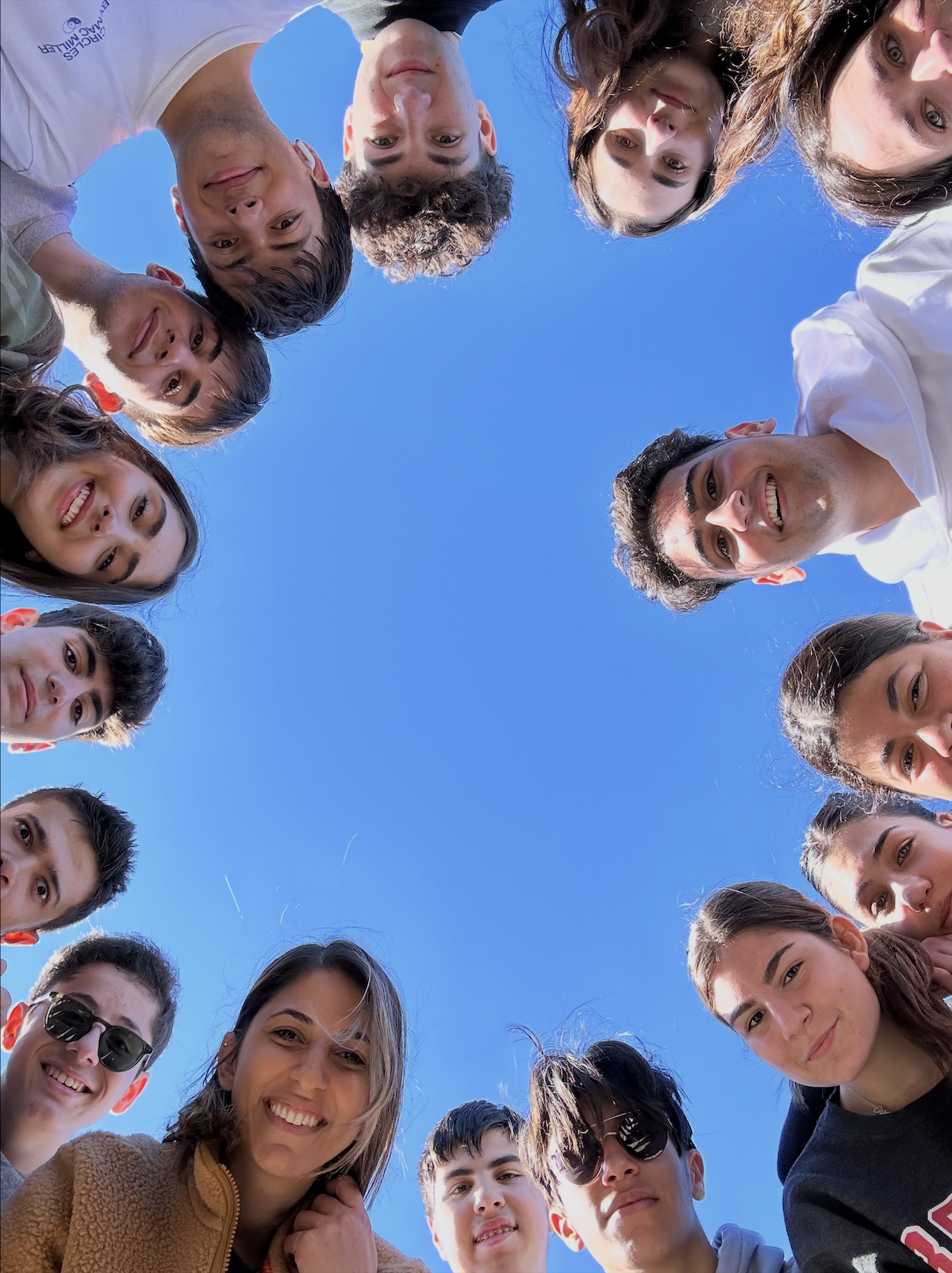
Saving the Sea’s community continues to grow.
Currently, Saving the Sea is conducting research for the US Plastics Pact, which has been recognized by the Sustainability Commission of the City of Glendale, California. The nonprofit has also submitted testimonies to the California State Legislature and recently received over 100 applications for a policy analyst position.
Ispendjian explained that Saving the Sea’s research is important in maintaining and growing relationships with organizations and initiatives that drive change. He noted that Saving the Sea’s next goals include creating accessible resources that raise environmental awareness and knowledge beyond policy.
“Our goal is to build an organization that lasts beyond any one founding member and becomes a lasting institution for student-led environmental research and advocacy,” Ispendjian said.