Institute at Brown for Environment and Society

IBES celebrates the contributions and legacies of J. Timmons Roberts and Kurt Teichert

This fall marks the start of Roberts’ and Teichert’s final academic year at Brown. As they prepare to retire, they leave a lasting legacy through decades of teaching, scholarship, and service.

For decades, J. Timmons Roberts and Kurt Teichert helped shape the Institute at Brown for Environment & Society (IBES) through their shared commitment to actionable environmental solutions. Although their careers followed different paths—one focused on climate policy and social science, the other on sustainability, experiential learning, and the built environment—both believed that addressing environmental challenges requires collaboration, curiosity, and preparing students to lead.

Roberts' passion for the environment began as a junior high school student backpacking in the outdoors, and Teichert's was sparked in 1979 during his undergraduate years, jarred by the partial meltdown at the nearby Three Mile Island nuclear plant. Those formative experiences ultimately led them both to College Hill, where they spent decades leading environmental scholarship and creating hands-on learning opportunities for students.

J. Timmons Roberts: Inspiring Climate Action Through Research

Throughout his 17 years at Brown, Roberts—Ittleson Professor of Environmental Studies and Sociology—challenged students to see research not just as an academic exercise, but as a tool for creating real-world change. Arriving in 2009, he was immediately drawn to the unique drive of the student body.
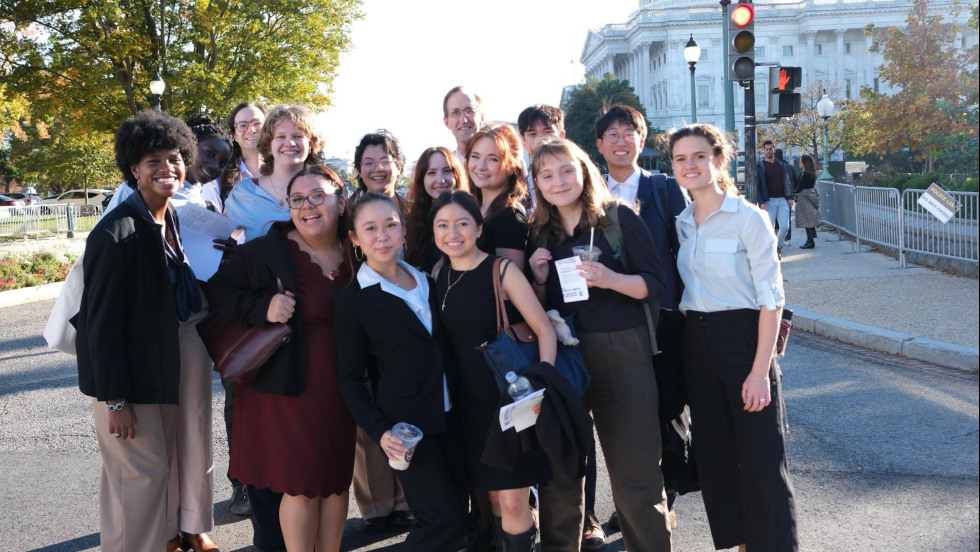
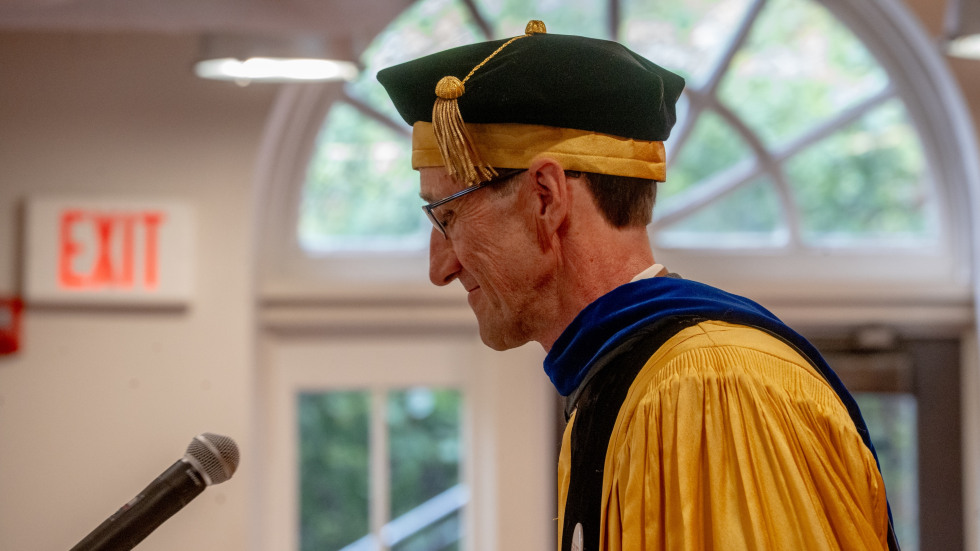
“ The students at Brown want to change the world, and they don't want to wait until after they graduate. They're really interested in research that has an impact. ”

J. Timmons Roberts Ittleson Professor of Environmental Studies and Sociology

To channel that energy, Roberts co-founded the student-driven Climate and Development Lab (CDL). Under his leadership, the CDL began working directly with the UN negotiations’ coalition of the 48 least developed countries, providing vital policy briefings on adaptation finance, losses, and damages to help these vulnerable nations shape their own climate agendas.

This drive to understand the political friction behind climate policy ultimately led to one of Roberts’ most significant achievements: the creation of the Climate Social Science Network (CSSN). Founded alongside Robert Brulle, IBES visiting professor and professor emeritus at Drexel University, the network was born out of a critical realization: "The climate movement, in particular, has failed again and again because they just didn't understand their opposition at all," Roberts explained.

To provide the research capacity needed to understand those barriers, the CSSN was launched to study the politics of climate change and institutional obstruction. What started as a targeted effort has grown into a massive international collaborative. Now extended into its seventh year of funding, the CSSN has expanded to include 900 researchers worldwide across 17 distinct thematic working groups, distributing over $2.5 million in grants to support vital environmental social science.

Closer to home, Roberts' work consistently bridged the gap between local and global politics. One of his fondest campus memories is of the "Denial Detectives," a group of students who tracked climate testimonies across Rhode Island government committees. That project eventually blossomed into HowDoTheyLobby.org, the world’s largest database on state-level lobbying. His collaborative approach culminated in a major milestone in 2016: helping draft and pass the Resilient Rhode Island Act, the state's first major climate legislation.

Inspired by his own undergraduate mentor, biology professor Ray Heithaus of Kenyon College, Roberts intentionally treated his students as true colleagues.

“ I want to be remembered as somebody who cared about students, who gave them opportunities to use their voice, to learn skills, and try to influence policy. ”

Timmons Roberts

Kurt Teichert: Building a Culture of Sustainability

Over his 34 years at Brown, Teichert became one of the University's leading voices on structural sustainability. He joined the community with a desire to scale up the sustainable design principles he had practiced at small nonprofits. As the Environmental Coordinator in the Provost’s Office, Teichert’s early days were spent in the trenches of campus infrastructure—upgrading lighting and replacing electric motors to maximize energy efficiency.

When Brown launched major capital campaigns a few years later, Teichert became deeply embedded in the architectural design and engineering of the campus's major new construction and renovation projects. Throughout his career, he also became closely associated with the Urban Environmental Lab (UEL), helping cultivate it as a welcoming, vibrant hub for environmental learning and community.

As his role evolved into lecturing, Teichert became beloved for his immersive, community-engaged teaching in courses like “Transcending Transportation Impacts” and “Sustainable Design in the Built Environment.” He pivoted class projects away from purely theoretical concepts to applied, local solutions, partnering students with mentors across the Providence community.

Teichert's unique impact often reached students outside the traditional environmental tracks. He fondly recalled moments when applied mathematics or theory-heavy majors would take his courses and "the light would go on," completely shifting their career trajectories toward practical sustainability. His dedication to mentorship even extended to the athletic fields, where he served as an assistant coach for the Brown women's rugby team for seven years.

As he looks back on the ebb and flow of different campus administrations and the constant, renewing energy of the student body, Teichert hopes his students carry away a practical framework for the climate crisis. "Solving issues of climate change is a whole lot of small percentages added up," Teichert said. "No matter what people are doing in their careers, they can make decisions that are systemically oriented toward solving environmental problems."

“ My hope is that students carry those experiences forward and continue making decisions that help solve environmental problems. ”

Kurt Teichert Teaching Professor of Environment and Society

An Enduring Impact

As the Brown community celebrates the careers of Professors Roberts and Teichert, IBES extends its deepest gratitude for their decades of scholarship, mentorship, and service. 

"Timmons and Kurt have had an outsized impact on shaping IBES to be the powerhouse of environmental scholarship that it is today," said IBES Director Kim Cobb. "As faculty, their passion inspired generations of students to tackle today’s most pressing challenges. I am grateful for their many gifts to IBES, to Brown, and to the world, and I wish them all the best in their next chapters."