Institute at Brown for Environment and Society

WATCH | Usable climate science: Adam Sobel on making risk research work for the real world

At a recent IBES seminar, Columbia University’s Adam Sobel called for a transparent approach to climate risk science—one that guides practical decisions in an era of extremes.

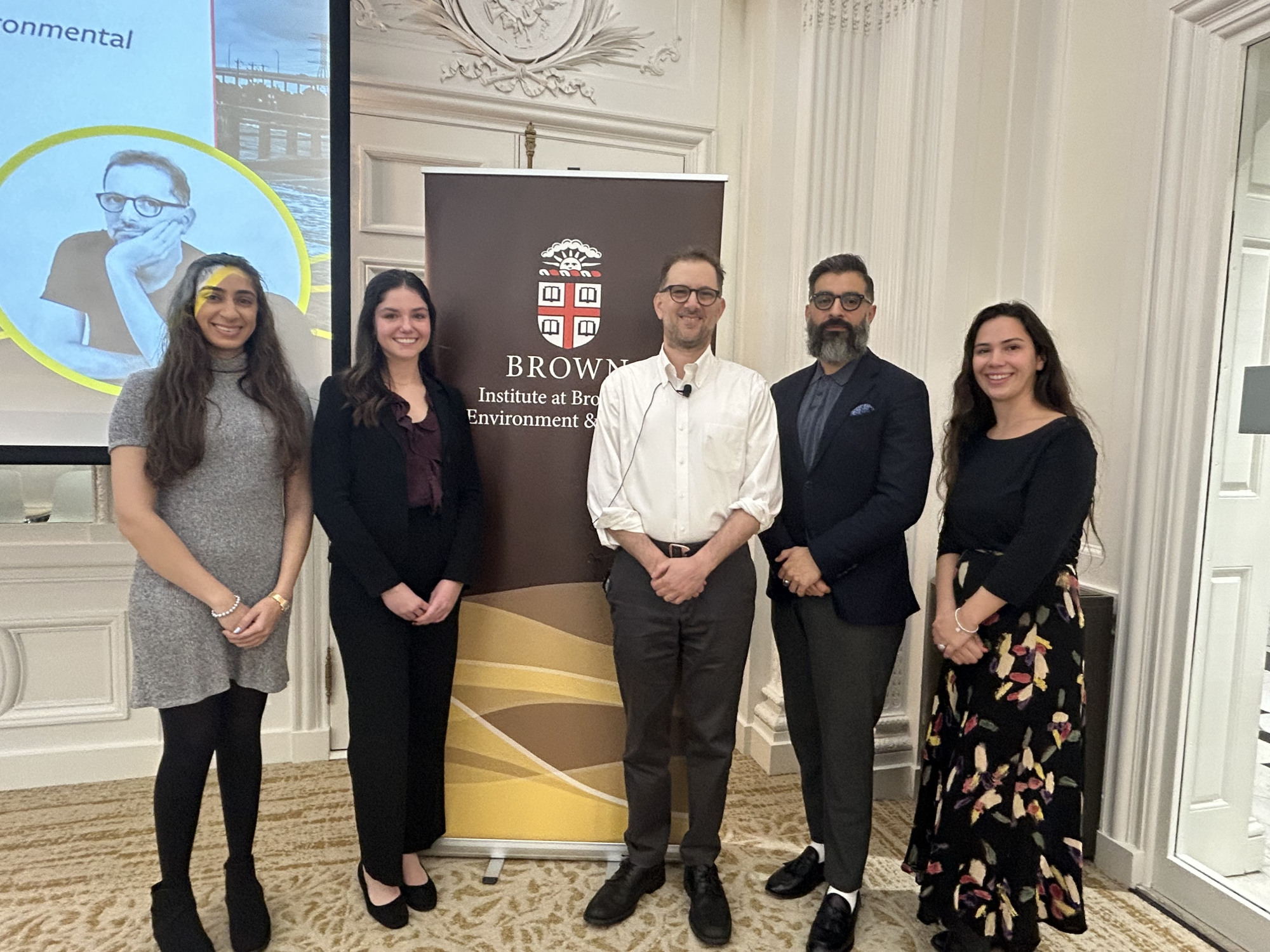
Sobel and graduate student organizers
Sobel (center) with the graduate student organizers of the event: Sonia Vohra, Chandler Morris, Juben Rabbani, and Montana Stone

On October 31, IBES hosted Columbia professor Adam Sobel for “Usable Climate Science: Calculating Climate Risk in an Era of Extremes,” the second seminar in the Brown Seminar Series on Environment & Society organized by IBES graduate student affiliates. Speaking to a packed audience in Andrews House and online, Sobel examined one of the field’s most pressing challenges: how to turn vast amounts of climate data into insights that inform real-world decisions.

Rethinking climate science for an age of uncertainty

As the demand for climate risk information grows, traditional climate science is no longer enough, says Sobel. The need for “usable” climate science—information that can meaningfully guide adaptation, policy, and investment—has never been higher. But without standardized methods for assessing and communicating risk, the field could become fragmented and inaccessible, dominated by private companies offering expensive, proprietary tools with little transparency. 

Sobel laid out how his team—rather than relying solely on  historical records, traditional climate models, or private catastrophe models—builds open, peer-reviewed statistical-dynamic models that generate large sets of synthetic storms, then link them to exposure, vulnerability, and estimate loss.

Usable Climate Science


Columbia Professor Adam Sobel argues for coordinated, public efforts to build usable climate risk science in an era of extreme weather.

Building public systems for climate risk

Sobel grounded his argument in concrete examples from his research, including the growing uncertainty around hurricane risk under climate change and the ambiguous trends in the tropical Pacific that complicate global climate predictions. These cases, he explained, underscore the limits of even the most advanced climate models when applied to real-world risk analysis. 

Sobel’s central message was a call to action: the scientific community must build publicly available infrastructure for climate risk assessment, including frameworks, standards, and datasets that are both rigorous and widely accessible. 

“ All this uncertainty only increases the motivation to act because uncertainty increases risk. ”

Adam Sobel Professor of Applied Physics and Applied Mathematics and of Earth and Environmental Sciences, Columbia University

A lively discussion followed, with questions from faculty and students about the political, ethical, and economic dimensions of climate risk communication. The event concluded with a reception, where attendees continued the conversation over refreshments in the Andrews House atrium.