How does academic research move from theory to impact? Sometimes it happens when professors sit on utility councils, when undergraduates report on neighborhood air quality, when a semester’s worth of student work lands on a senator's desk. The stories below offer a glimpse of how IBES faculty and students engage with Rhode Island communities and places — in community centers and classrooms, from the sea to the statehouse.
Institute at Brown for Environment and Society
Date
April 22, 2026
Field notes: How IBES researchers are working with communities across Rhode Island
In labs, neighborhoods, and public forums across the state, IBES faculty and students are working side by side with Rhode Islanders to turn environmental challenges into actionable solutions.
Brown students reported on Providence’s rivers. Every. Story. Got. Published.
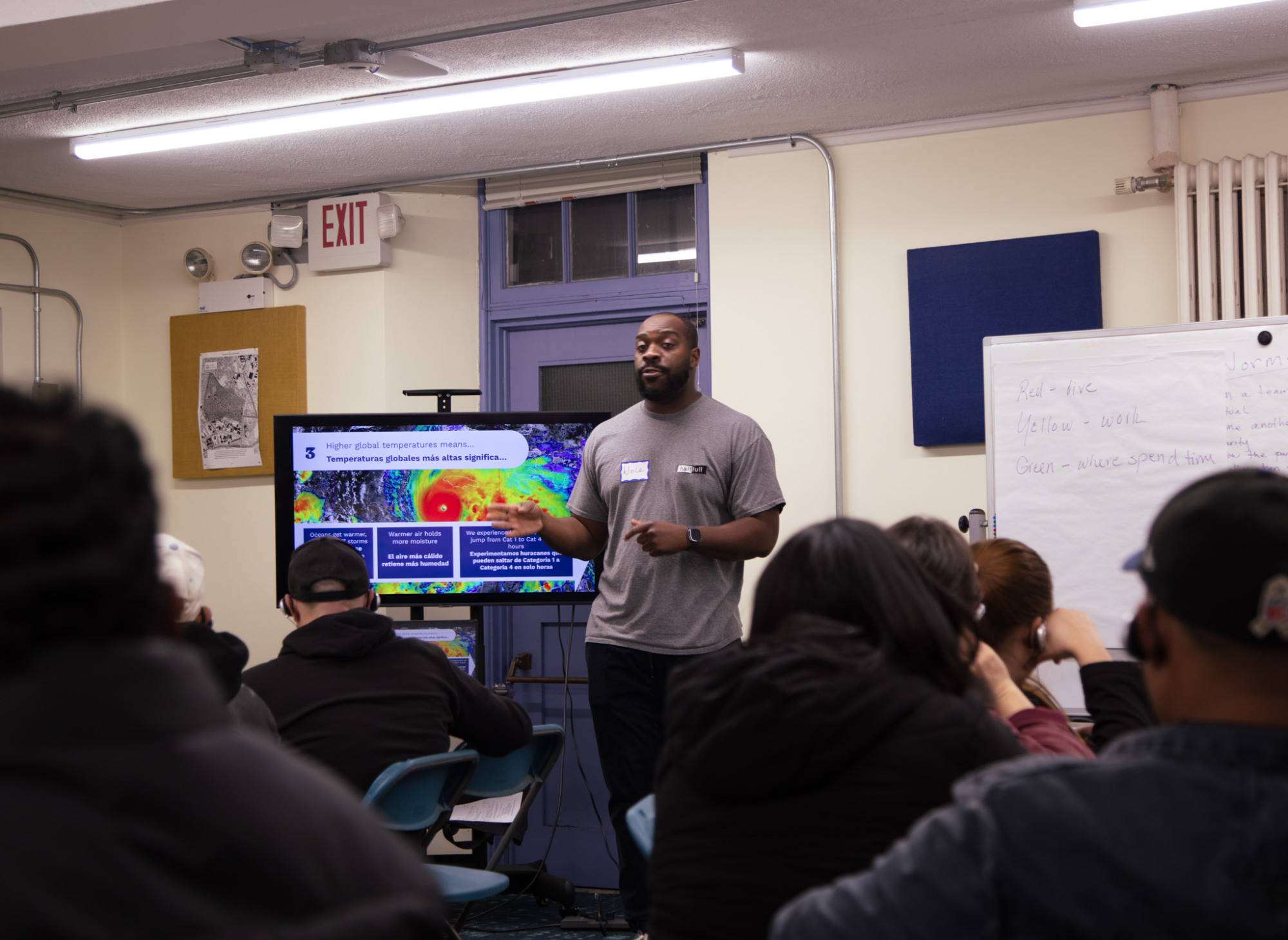
Rhode Island calls itself the Ocean State. But it also has nearly 1,400 miles of rivers. Last fall, 20 undergraduates in IBES’ “Science Journalism” course set out to report on the rivers running through Providence — the Woonasquatucket, Blackstone, Seekonk, and Moshassuck. Their instructor was Jennifer Adler, a marine biologist and National Geographic photographer who graduated from Brown in 2011. The assignment required at least five interviews and at least three scientists per story. By January, ecoRI News — Rhode Island's leading environmental news nonprofit — had published all twenty. Their editor called it extremely rare.
Who’s blocking climate action in Rhode Island? IBES students become denial detectives.
![Roberts and his Fall 2025 “Denial Detectives” [photo by Timmons Roberts]](/sites/default/files/signal-2025-10-22-150848.jpeg)
Rhode Island, Timmons Roberts will tell you, is “a scale model of a state” — small enough that a single well-researched report can move a conversation, a team of undergraduates’ semester of work can land on a senator’s desk, and everyone in the statehouse knows everyone else. Roberts, Ittleson Professor of Environmental Studies and Sociology, has been testing that theory since 2009. This January, his Climate and Development Lab released its most detailed study yet of who is blocking Rhode Island’s climate laws — and the researchers who built it include a sophomore and a junior.
Can you smell it from here? Brown’s Breathe Providence maps Providence’s air, neighborhood by neighborhood
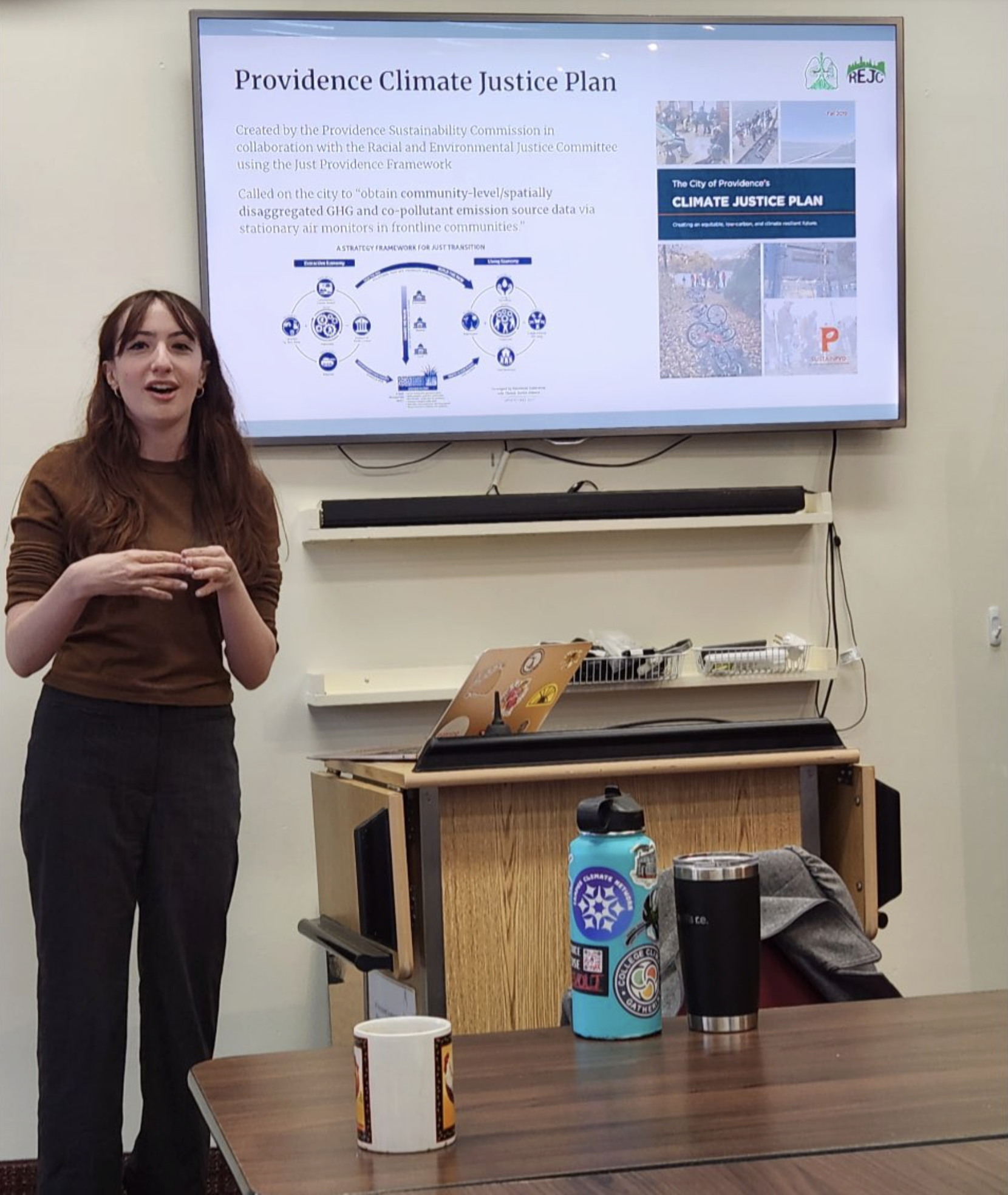
Emma Blankstein ’26 discusses the Providence Climate Justice Plan, which calls for the type of hyperlocal air quality monitoring that Breathe Providence performs. Photo courtesy of Hamilton House.
Emma Blankstein ’26 grew up in Los Angeles, where bad air days sometimes canceled school. So when she started presenting her air quality research this fall at Hamilton House — a Providence community center for older adults — she already knew that air pollution isn’t an abstraction: it’s canceled recess or a sore throat on the walk home.
Blankstein is part of Breathe Providence, an IBES project led by Professor Meredith Hastings that has installed 25 sensors across Providence to measure what residents are actually breathing, neighborhood by neighborhood. Her Hamilton House talk was one in a series IBES brought to the center last fall that connected Brown researchers with Providence residents.
No margin, no mission: How a finance class teaches students to make change happen
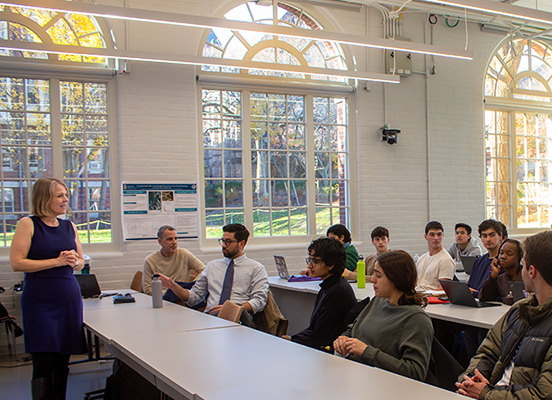
“No margin, no mission.” It’s Dr. Amy Nunn’s line, and when she visited ENVS 1545 — IBES’ course on the theory and practice of sustainable investing — she meant it literally. Nunn, CEO of the Rhode Island Public Health Institute and a Brown faculty member, walked students through the financial architecture of Open Door Health, a Providence clinic she co-founded that serves more than 10,000 patients on a $10 million-a-year budget. The visit is exactly what Mark Tracy, IBES’ first Professor of the Practice in Sustainable Finance and Investing, built the course to do: show students who want to change the world that finance is integral to making it happen.
Stephen Porder cut the carbon emissions at Brown. Now he’s looking out for Rhode Island’s birds.
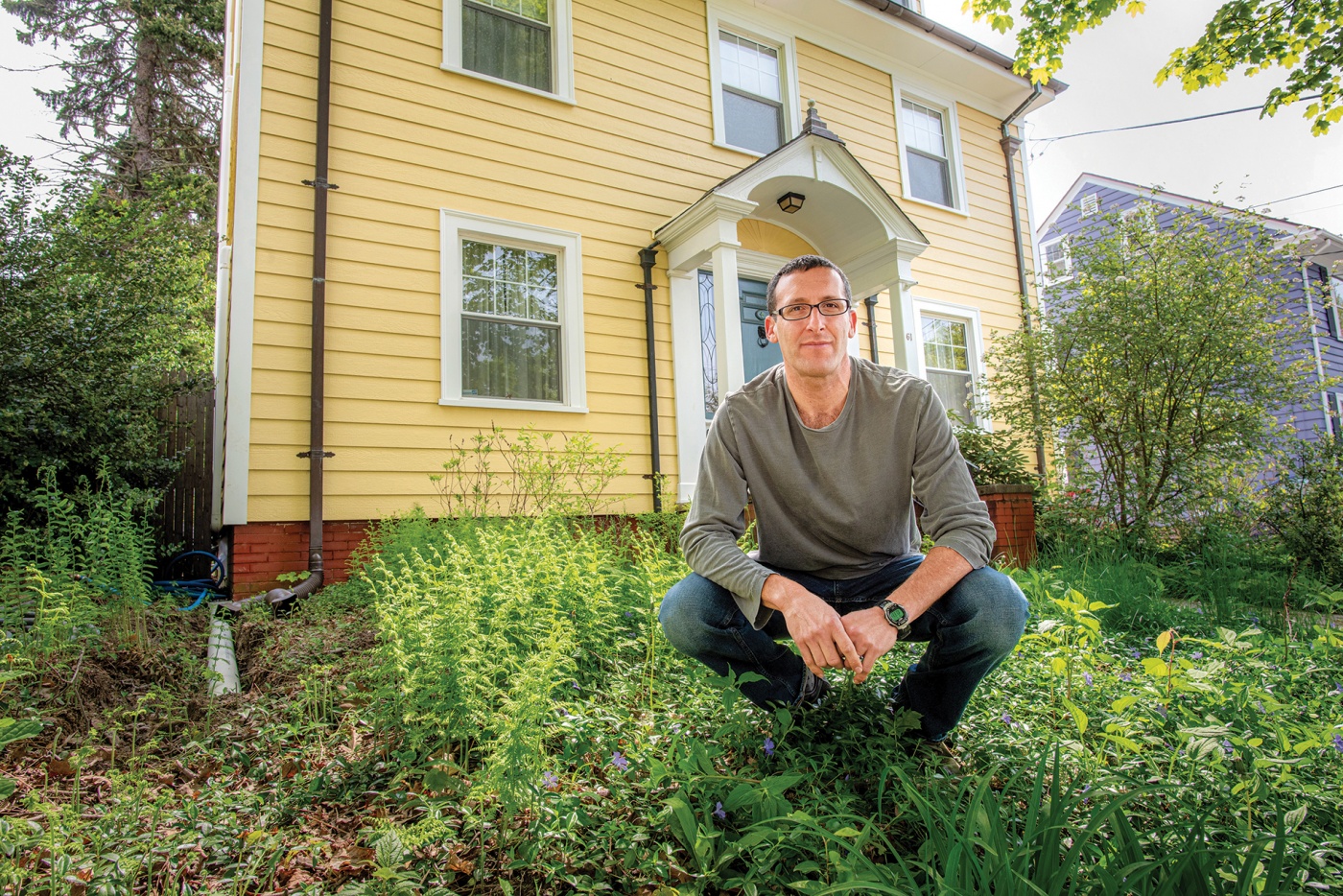
When Stephen Porder was recruited to the board of the Audubon Society of Rhode Island, it was not because he watches birds — though he’s since gotten into it — but because he knows how to turn off a gas meter. Porder, Acadia Professor of Environment and Society and Ecology, Evolution, and Organismal Biology, spent years as the University’s inaugural Associate Provost for Sustainability, building the engineering plan behind Brown's commitment to net zero by 2040.
He did it at his own 1920 Providence house too: sealing the leaks, adding insulation under the siding, gutting the attic to spray eleven inches of foam under the roof, pulling out the oil furnace and replacing it with heat pumps. “The most fun part,” he said in a Brown Alumni Magazine story, “is watching the oil truck pass my house all winter.” Now he’s doing it for Audubon, which is aiming for net zero by 2030 and true zero — running on clean electricity around the clock, every day — by 2040.
Shoreline Stories: How South Providence residents are reimagining their waterfront
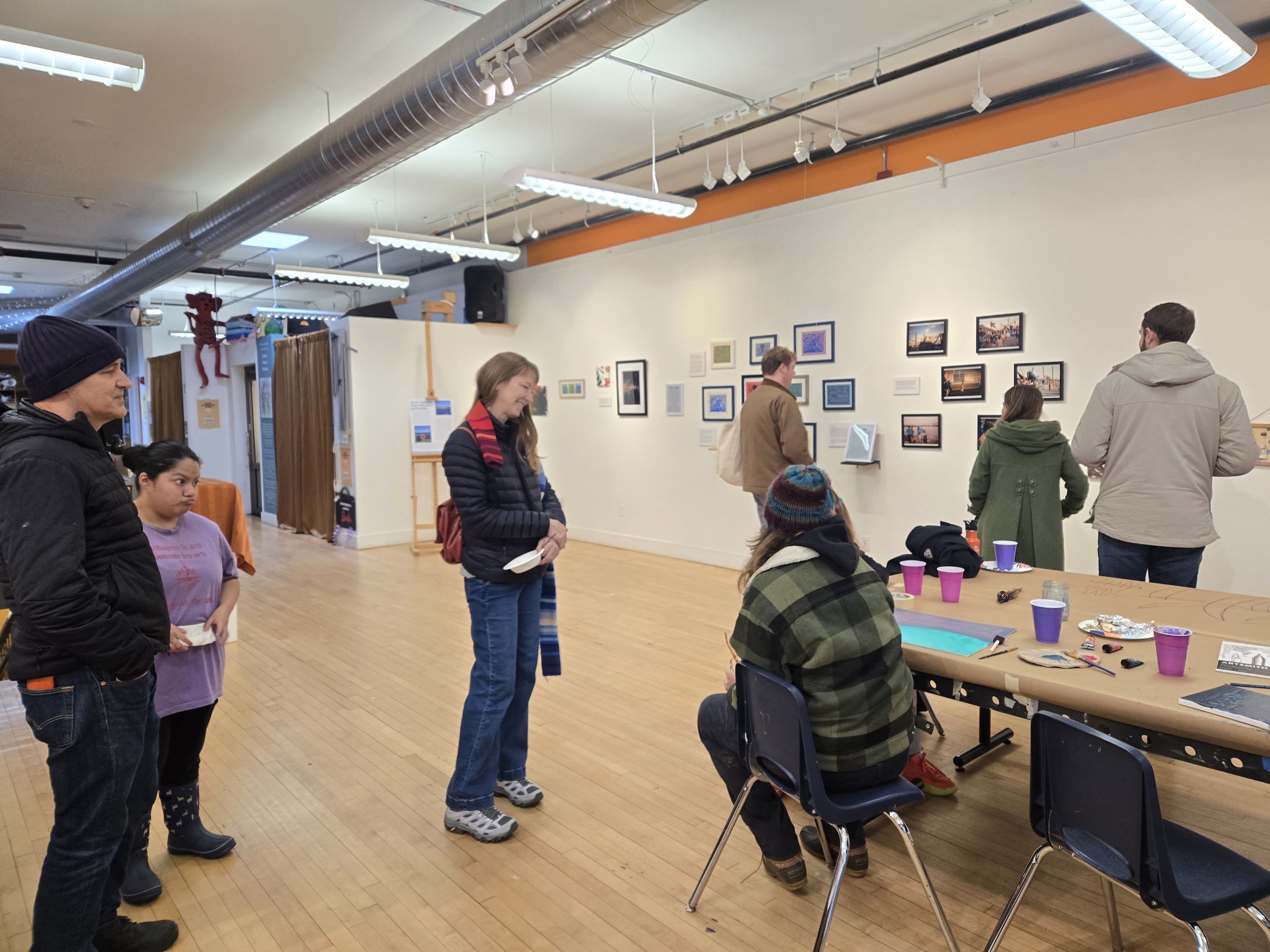
The prompt was simple: what does Providence’s industrial waterfront mean to you, and what do you want it to become? Nine South Providence residents answered in photographs, in paint, in a 3D sculpture. The result, Shoreline Stories, opened in December at New Urban Arts on Westminster Street and online via a digital gallery. The project was coordinated by IBES research associate Alexie Rudman and undergraduate and Royce Fellow Keira Yanez ’27, funded by the Brown Arts Institute, and advised by Associate Teaching Professor of Environment & Society Leslie Acton.
A Brown professor takes on Rhode Island's sky-high electric rates
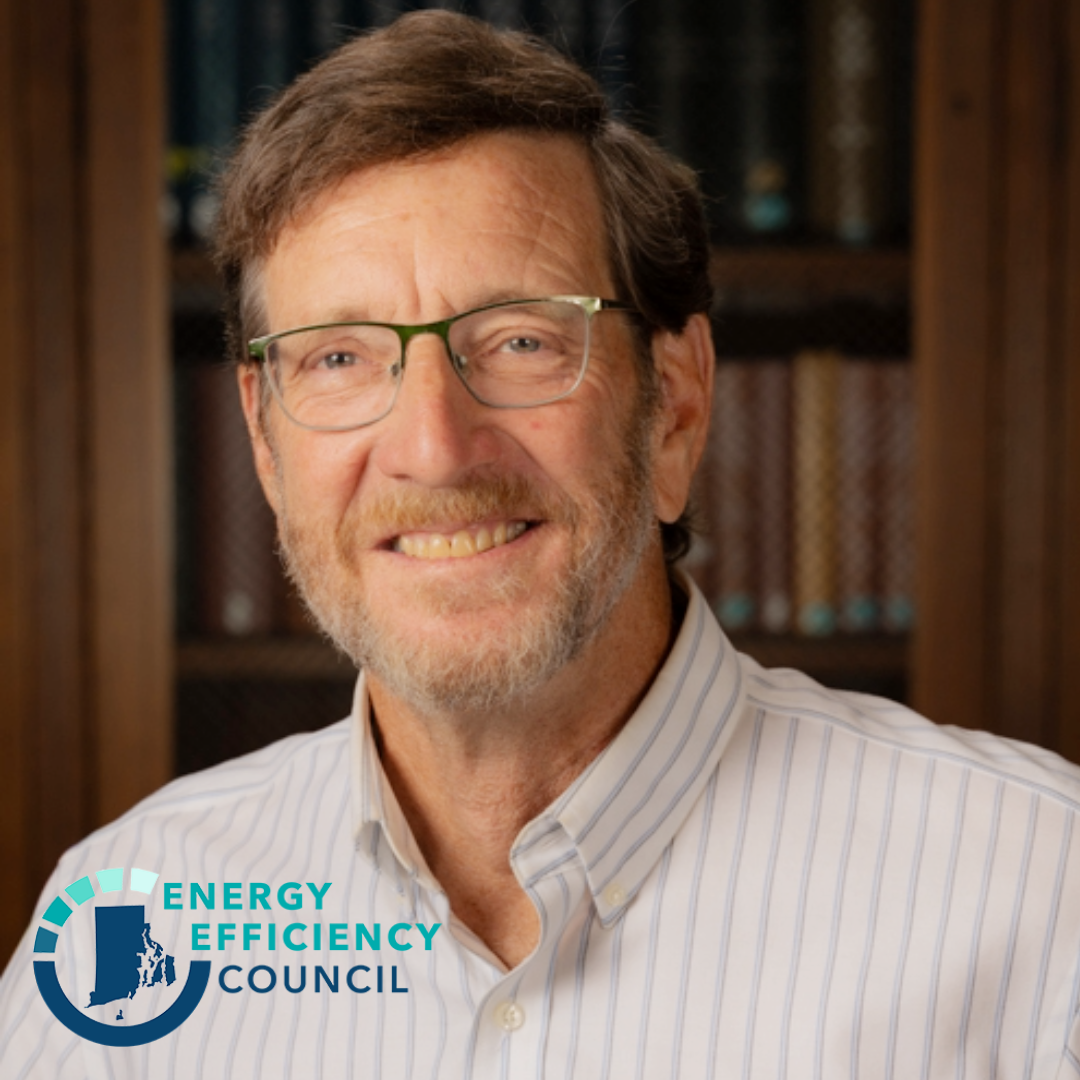
“People want hot showers and cold beer,” Kurt Teichert says, borrowing a line from energy expert Amory Lovins. Providing those services efficiently lowers energy bills as customers use less electricity. Teichert, a Teaching Professor of Environment and Society, serves on the state's Energy Efficiency Council, where he represents ratepayer interests by providing input and guidance to help ensure essential services remain affordable. He came to Brown in 1992 to do exactly this kind of work — pushing buildings, systems, and institutions to get more out of less. Last year, he became the first council member in the council's history to testify before the Public Utilities Commission.
A Brown course where the homework is real work
“I’ll be measuring the coral every day and it’ll be so cool.” That may be what undergrads expect environmental studies to be, says Associate Teaching Professor of Environment & Society Leslie Acton, but that's not what happens in her intro course, ENVS 0110, required for every concentrator. Instead, Acton pairs small groups of undergrads with local organizations — a kelp farmer growing sugar kelp in Narragansett Bay, a fishing captain who’s spent thirty years watching Rhode Island waters change — and asks them to produce something the partner actually needs.
This past year, that meant creating deliverables like invasive species documentation for the Nature Conservancy on Block Island and written profiles of sustainable food businesses for the Rhode Island Food Policy Council’s website. “This is complex and it is hard,” Acton concedes, compared to measuring coral, “and in the end it’s rewarding.”
The muskrat mystery: An IBES team uses DNA and NASA satellites to suss out what’s threatening a species
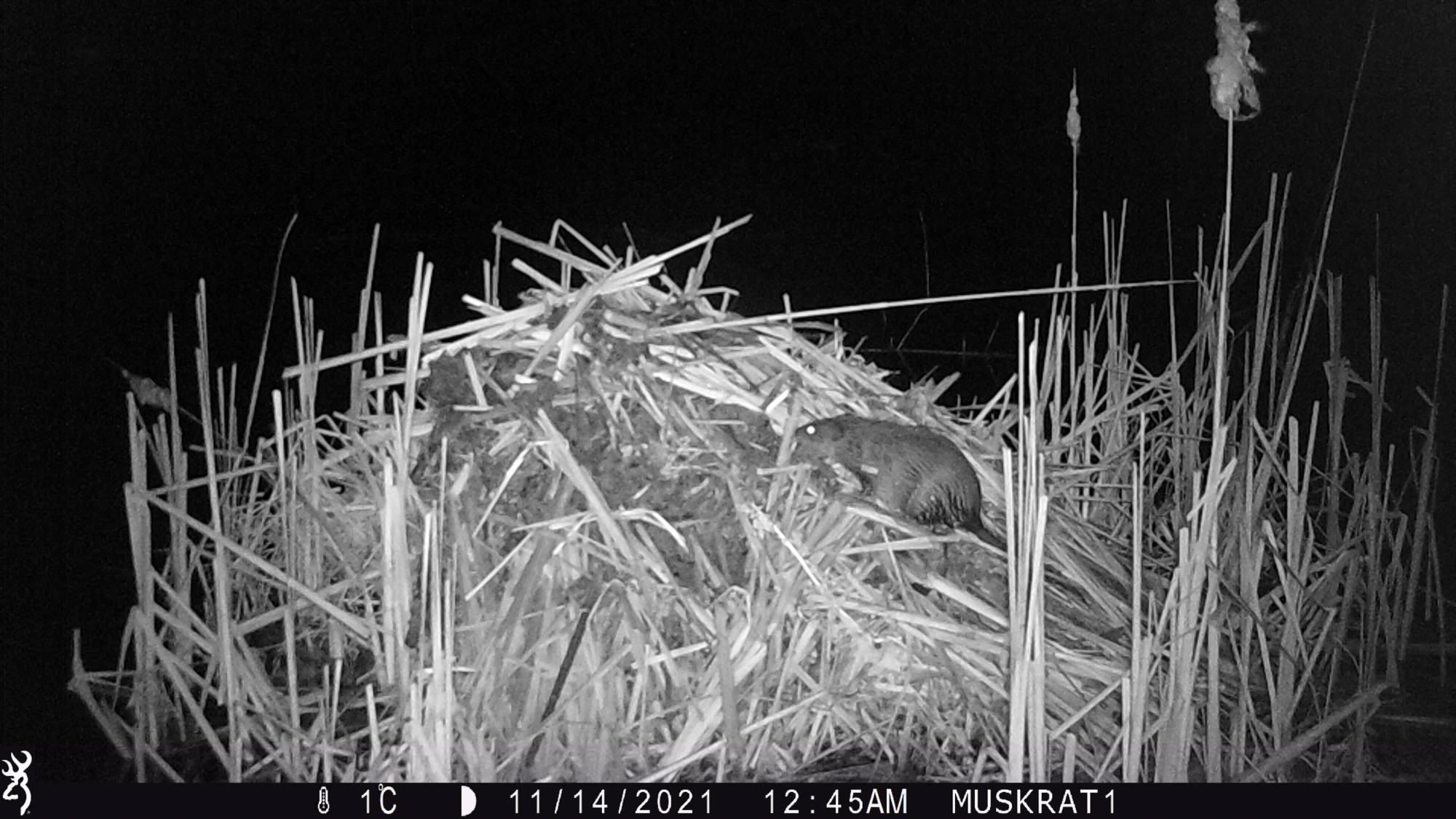
Luke Fromm waded into a Rhode Island marsh, dipped a jar in the water, and pulled out evidence of an animal he couldn’t see. The jar held environmental DNA: microscopic genetic traces shed by muskrats living somewhere upstream. It was enough. The assay that made this possible did not exist until Fromm, then a Brown undergraduate, developed it with IBES Professor Laurence Smith on a $10,000 IBES seed grant. Now, backed by $600,000 from NASA, Smith is deploying that tool — alongside satellites and a new state wildlife partnership — to solve one of North American ecology’s quieter emergencies: muskrat populations have collapsed 80 to 90 percent across the continent, and nobody knows why.
Want to dig deeper?
Look for upcoming news stories throughout 2026 that take a closer look at each of these topics.