Institute at Brown for Environment and Society

Meet Voss Fellow Sofia Kassalow ’26: Turning DNA from parasitic worms into a publicly accessible database

Kassalow, an Environmental Sciences & Studies concentrator on the conservation science and natural systems track, analyzes samples of parasitic worms found in tropical mammals to expand a scientific database for use by researchers.

The Voss Fellowship Program is the premier training and funding opportunity for undergraduates interested in environmental research at Brown University.

Sofia Kassalow ’26

What can data reveal about the hidden links between wildlife and human health? Increasingly, as threats to both ecosystems and human health grow, researchers are turning to data to uncover patterns that were once impossible to see. As an IBES Voss Fellow and research assistant in the Kartzinel Lab, Kassalow is making exciting progress in the creation of a DNA barcode database to aid researchers around the world. The prestigious one-year Voss Fellowship enables undergraduate scholars such as Kassalow to dive deeper into research on climate, sustainability, or the environment.

How would you summarize your research?

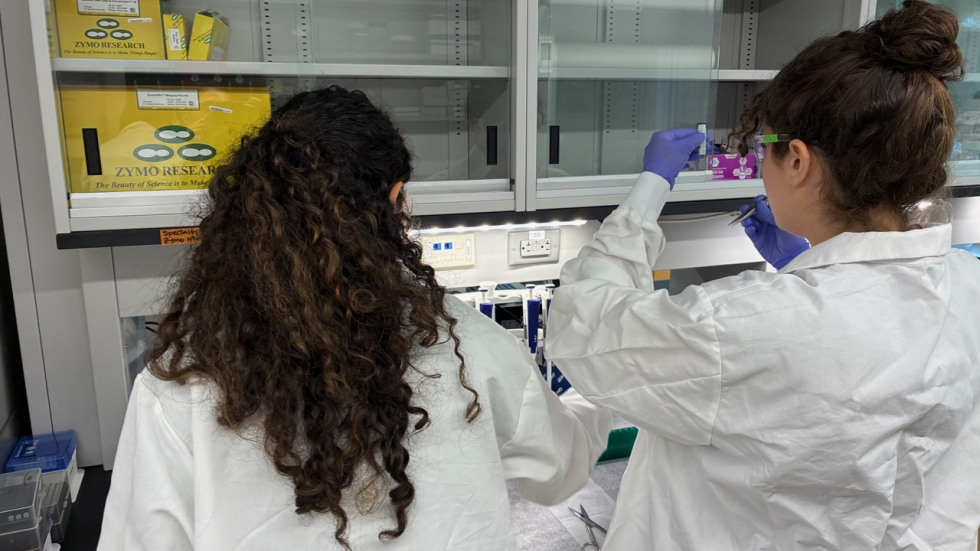
“I’m working on a molecular parasitology project at the Kartzinel Lab, where we’re building a DNA barcode database called HelmBank for gastrointestinal worms infecting tropical mammals. Traditional identification of parasites using microscopy is slow and labor-intensive, so DNA barcoding offers a faster, reliable alternative. DNA barcodes are like genetic fingerprints that we can use to match an unknown specimen to a known one in a database, determining exactly what species it is. My project focuses on expanding the publicly accessible library of these fingerprints—or these barcodes—for wildlife parasites, so that anyone working in conservation or public health anywhere in the world can more easily identify and track parasite species.”

What does it mean to track DNA barcodes, and how does that translate into data?

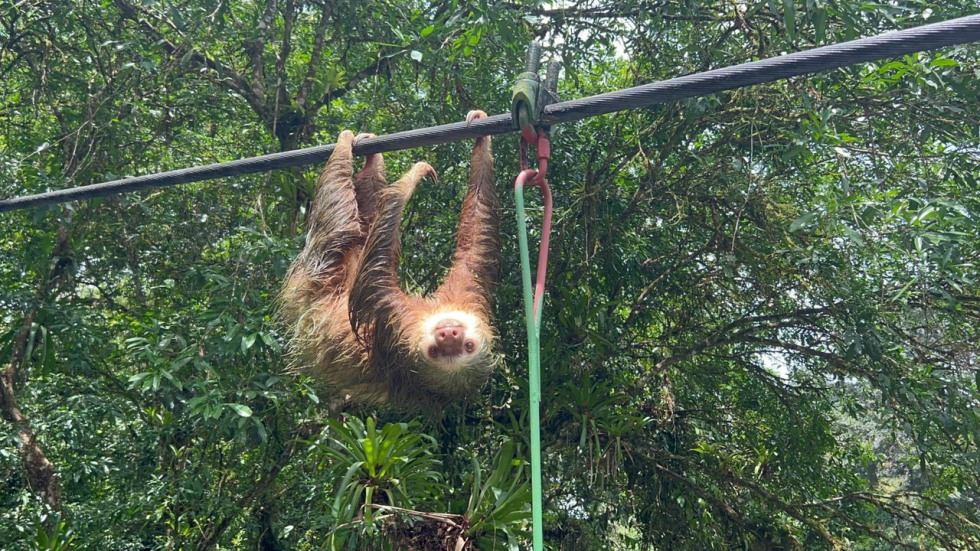
“The barcodes that we’re generating in the lab can be used to track parasites in wildlife across the tropics. We’re working specifically with samples from Argentina and Costa Rica. So, for example, a researcher could use our database to determine whether a parasite found in a sloth matches any of the species we’ve barcoded and could discover a whole host of things. Maybe it’s an entirely new species or maybe it’s never been documented in sloths. Maybe it’s being found with an increasing frequency in an area experiencing deforestation, which tells us something about the health of that ecosystem.

By matching parasites to those in the database and by adding new specimens, we’re able to draw conclusions about population health and host-parasite relationships. We may even discover parasites with zoonotic potential, meaning they could be transmissible to humans.”
“ Data is a very powerful tool for understanding the threats that both animals and humans are facing. ”

What have you learned through your research into parasite-host relationships in tropical wildlife?

“I’ve been learning which lab methods are the most reliable and accurate for processing barcodes and essentially fingerprinting these parasites. Every parasite phylum we’re working with requires tailored protocols. With improved methods, we’re prepared to work with any species as soon as it arrives in the lab. We’re making some exciting progress and have identified some promising new protocols, and we’re hoping to add dozens of new DNA sequences to HelmBank in the near future.

I’ve also learned just how important the standardization of datasets is. When we’re trying to conduct analyses of host-parasite relationships, it’s not enough to know that a parasite is a ‘tape worm’ and the host is a ‘feline.’ Additionally, sticking to proper naming conventions is the difference between using a simple line of code to extract the information we need and spending hours troubleshooting to pull information from a messy dataset. The more specific and standard we can get with our data, the more useful it becomes.”

What implications could this database have for both conservation and public health?

“There are so many! Researchers could discover new species, document transmission patterns between different host species, track crossover between livestock and wildlife and humans… Through HelmBank, we’re adding to the toolbelt of scientists working with these parasites. So there’s a lot of potential uses and it’ll be publicly available; anyone in the world could make their own discoveries with it.”

A day in the life

Join Kassalow as she conducts research in Associate Professor Tyler Kartzinel’s lab.

@brown_ibes

Where do you see this work taking you in the future?

“This fall, I’m heading to vet school with the goal of becoming a wildlife vet. In recent years, I’ve become interested in the One Health framework, which recognizes the interconnectedness of human, animal, and environmental health. The research I’m doing has deepened my understanding of wildlife health and how it’s connected to ecosystem and human dynamics. I see this project as a bridge into my work in the future as a wildlife vet, ensuring that humans and wildlife can coexist, preventing crossover of diseases, managing populations, and protecting our shared environments and health.”