IBES expands undergraduate research opportunities with new assistantship program
This summer, the Institute at Brown for Environment and Society (IBES) welcomed its first group of students into a new program designed to expand access to faculty-mentored research opportunities in climate and the environment.
Funded through IBES’ Student Transformative Engagement Pathways (STEP) initiative, the Extended Undergraduate Research Assistantship (EURA) program supports multi-semester research collaborations that give students hand-on experience investigating some of today’s most pressing questions about the climate and environment while building research skills and professional experience. Four student-faculty teams are conducting research in Providence this summer, with an additional eight projects continuing during the academic year.
The program reflects IBES’ broader commitment to increase access to paid experiential learning opportunities and prepare students to address environmental challenges through research, scholarship and community engagement.
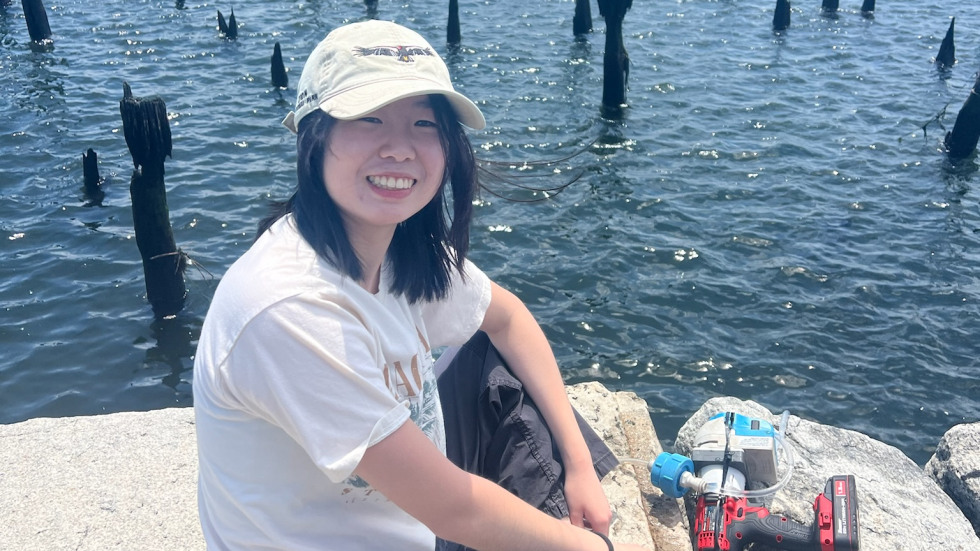
Claire Xu ’27 is working with IBES faculty member Daniel Ibarra on a project examining environmental conditions along Providence's industrial waterfront. Photo courtesy of Xu.

Xu and Ibarra prepare water sampling equipment. Photo courtesy of Xu.
Investigating industrial contamination along Providence’s waterfront
Claire Xu ’27, who is pursuing an Sc.B. in Earth, Climate and Biology in the Department of Earth, Environmental and Planetary Sciences (DEEPS) and a certificate in Data Fluency, is working with Assistant Professor Daniel Ibarra on a project focused on the environmental conditions along Providence's industrial waterfront.
Building on the community-driven Waterspeak monitoring program, the research examines how industrial contamination and storm events affect water, soil and air quality at the Public Street shoreline and along the Providence River. Through regular sampling and analysis of water and sediment, the team will assess the distribution of contaminants and provide data that can inform future remediation efforts and planning for public access to the waterfront.
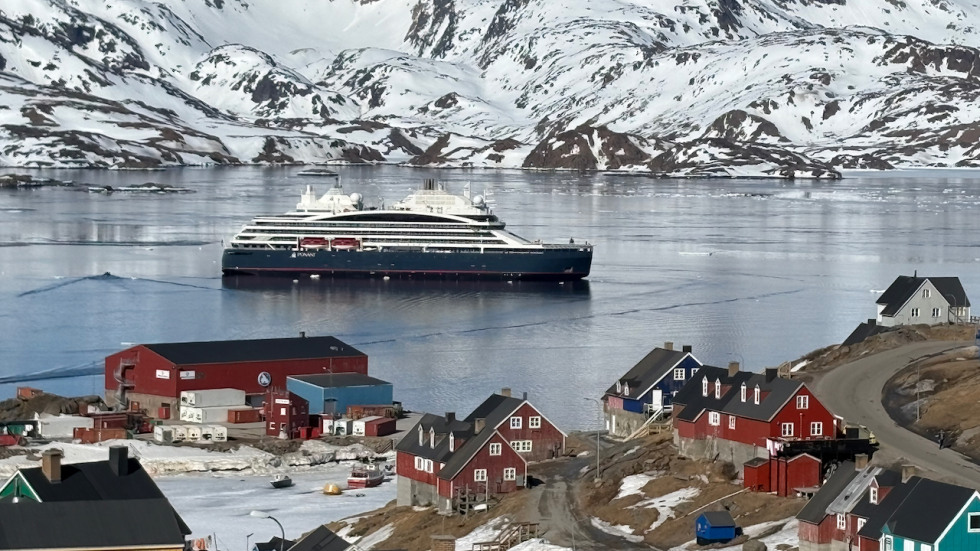
A tourist vessel in Tasiilaq, Greenland — a town that Jasper Perlis ’28 is supporting through his research. Photo courtesy of Amanda Lynch.
Researching maritime risks in a changing Arctic
Applied Mathematics and Geophysics concentrator Jasper Perlis ’28 is working with Professor Amanda Lynch on a project examining maritime hazards across key Arctic shipping routes.
As climate change reshapes northern waterways and shipping activity increases, the team is investigating how weather-related hazards—including strong winds, extreme waves, freezing spray and polar cyclones—affect maritime safety and logistics. Using observational and modeled environmental data, the project will produce spatial hazard maps that identify where dangerous conditions are most likely to occur throughout the year.
The research aims to improve risk awareness and support decision-making for maritime operations in strategically important and environmentally precarious Arctic waters.
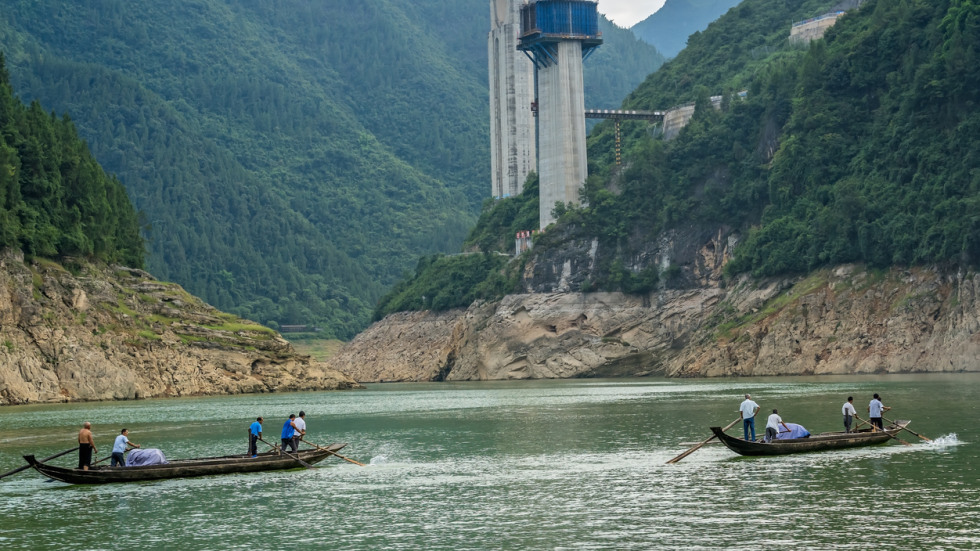
Fishermen work along the Yangtze River, one of the world’s most significant river systems and the focus of research exploring how human activity has shaped its landscapes over time. Image courtesy of iStock.
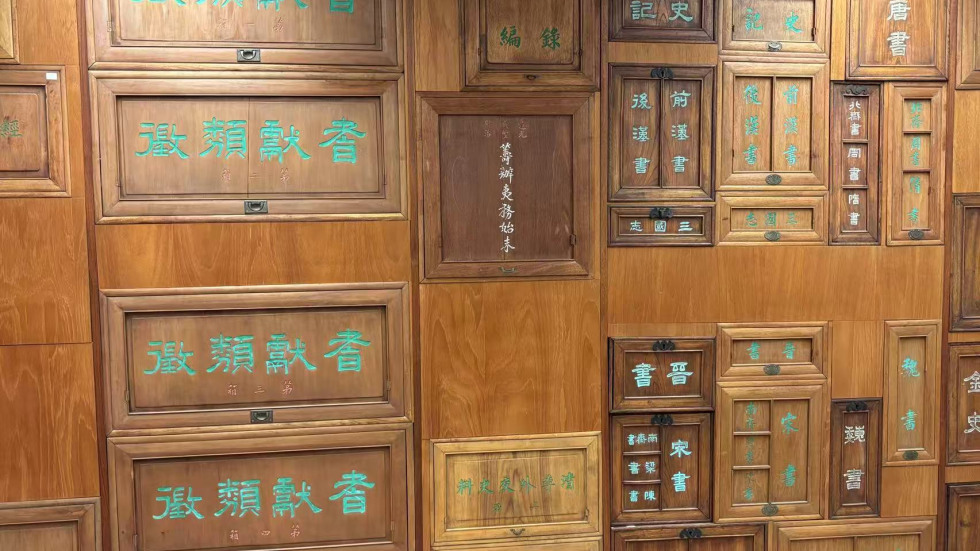
Historical records and archaeological evidence are among the sources informing Siyuan (Michael) Shui’s research on environmental transformations in the Yangtze River Valley. Photo courtesy of Shui.
Exploring environmental change in ancient China
Siyuan (Michael) Shui ’28, a concentrator in Classics and History, is partnering with Associate Professor Brian Lander to investigate environmental transformations in the Yangtze River Valley during the expansion of China's Han Empire.
Drawing on archaeological evidence, historical records and climate data, the project examines how human settlement, agriculture and imperial expansion altered ecosystems in one of the world's most important river basins. The research integrates environmental history with cultural and archaeological analysis to better understand the relationship between ecological and societal change.
The work will also contribute to the development of a future Brown course examining the environmental history of China’s early empires.
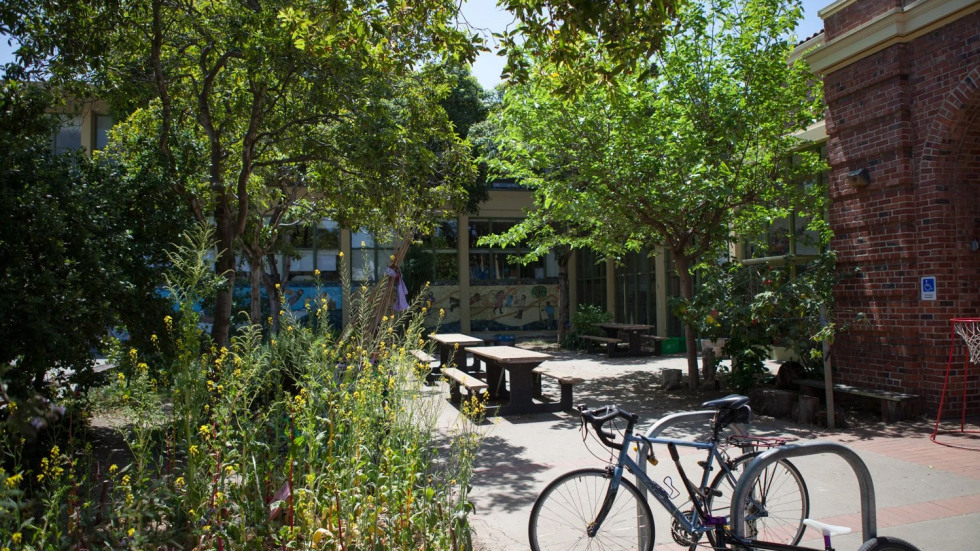
Tree canopy surrounding a school can help reduce extreme heat and create more comfortable learning environments for students. Photo Credit © Paige Green, Education Outside.
Examining tree canopy as natural infrastructure
Applied Mathematics concentrator Nathan Tavares ’28 is collaborating with IBES affiliate Matthew Kraft on research exploring how tree canopy coverage may support educational equity.
The support from the EURA program will allow us to examine the degree to which K-12 students have access to green spaces on campus, and analyze how tree coverage impacts students’ experiences and outcomes at school.

The project investigates how schoolyard greenness can reduce temperatures and mitigate the effects of extreme heat, which can negatively affect student learning and disproportionately impact marginalized communities. By combining geospatial data on tree coverage with measures of student outcomes such as absenteeism and academic performance, the research seeks to better understand the role of natural infrastructure in creating supportive learning environments.
The findings could help inform future investments in schoolyard greening and climate adaptation strategies.
More research begins this fall
During the 2026–27 academic year, eight additional student-faculty partnerships in the EURA program will begin projects exploring topics ranging from artificial intelligence and climate science to community resilience, Indigenous studies and public health.
| Research area | Student | Faculty mentor |
| Artificial intelligence for environmental hazard response | Camilo Tamayo-Rousseau ’27 | Emanuele Di Lorenzo |
| Tracking the health of Narragansett Bay using satellite imagery and field observations | Lawrence Chen ’29 | Baylor Fox-Kemper |
| Community-engaged environmental resilience research | Avala Stamatakis ’27 | Leslie Acton |
| Atmospheric dynamics and climate modeling | Muyu Ye ’27 | Jung-Eun Lee |
| Earth's environmental history through geochemistry | Gabriella Giampietro ’28 | Timothy Herbert |
| Computational physics and environmental modeling | Nicholas Prior ’29 | John Marston |
| Indigenous and environmental studies | Lacie Binongial ’27 | Kevin Escudero |
| Food systems, health and environmental justice | Hawwi Jebena ’29 | Mindi Schneider |